
News & Insights
The Ultimate Guide to Dubai’s Iconic Green Walls

Introduction to Green Walls in Dubai
The vibrant cityscape of Dubai is not just a testament to architectural magnificence but also a pioneer in embracing sustainable innovation. Amidst towering skyscrapers and sprawling deserts, a green revolution is quietly taking root. The concept of green walls, also known as living walls, is transforming the urban landscape of Dubai, offering a refreshing burst of nature amidst the concrete jungle. These vertical gardens are more than just aesthetic marvels; they represent a significant step towards environmental sustainability and urban ecology.
The Rise of Green Walls in Urban Landscapes
Green walls have become a cornerstone of biophilic design, seamlessly integrating nature into built environments. In a city synonymous with luxury and innovation, it’s no surprise that Dubai is at the forefront of incorporating these eco-friendly structures. Green walls not only enhance the visual appeal of buildings but also offer practical benefits such as improved air quality and reduced urban heat. Visionaries and architects are increasingly advocating for their use, seeing them as a bridge to connect urban dwellers with nature.
The Impact of Green Walls on Dubai’s Environment
Dubai’s commitment to green walls is part of a broader strategy to create a more sustainable urban environment. According to experts, these installations play a crucial role in reducing the urban heat island effect by providing natural cooling and insulation for buildings. This is particularly pivotal in a region where temperatures can be extreme. The environmental benefits extend to enhancing biodiversity, as these living walls offer a habitat for various species, promoting ecological balance in urban areas.
Real-World Applications and Benefits
Numerous projects in Dubai exemplify the successful integration of green walls. One notable example is the Dubai Mall, which boasts an impressive vertical garden that captivates visitors while illustrating the potential of green architecture. These installations are not just confined to commercial spaces; residential buildings, hotels, and offices are also embracing the trend. For instance, companies are leveraging green walls to improve employee wellbeing and productivity. Research shows that exposure to greenery in workplaces can boost creativity and reduce stress levels, as highlighted in Boost Productivity And Creativity With Office Plants.
In conclusion, the advent of green walls in Dubai is more than a mere architectural trend; it’s a step towards a healthier and more sustainable future. As the city continues to evolve, the integration of nature into its urban fabric stands as a testament to Dubai’s innovative spirit and commitment to environmental stewardship.
The Growing Trend of Green Walls in Dubai
Dubai is rapidly transforming its skyline with the addition of stunning vertical gardens, also known as green walls. These living walls not only enhance the aesthetic value of buildings but also offer numerous environmental and health benefits. The trend of integrating green walls in Dubai is driven by the city’s desire to merge urbanization with sustainability.
Among the many benefits, green walls are particularly effective at improving air quality. By absorbing pollutants and releasing oxygen, they create a healthier environment for residents and visitors. A study by the National Aeronautics and Space Administration (NASA) highlights that certain plants can remove up to 87% of toxins in the air within 24 hours [NASA]. This makes green walls a vital component in battling pollution in bustling cities like Dubai.
Green walls also play a crucial role in energy efficiency. By acting as natural insulators, they help regulate building temperatures, reducing the need for artificial heating and cooling. According to the Green Roofs for Healthy Cities, vertical gardens can lower energy consumption by up to 30% during hot weather. This makes them an ideal choice for Dubai, where temperatures often soar.
Real-World Applications in Dubai
Several high-profile projects in Dubai showcase the effective use of green walls. The residential complex, Al Barari, features extensive vertical gardens that are a central aspect of its design philosophy. These walls not only enhance beauty but also create a soothing environment for residents, promoting mental well-being. The benefits of such designs extend beyond aesthetics, contributing to a more sustainable development model.
Another pioneering example is the International Financial Centre, which has integrated vertical gardens as part of its workspace renovations. This addition has reportedly improved employee productivity and reduced stress levels, in line with studies that suggest a biophilic design can enhance workplace efficiency [Reduce Workplace Stress With Office Plants].
As green walls continue to gain popularity, Dubai aims to set a benchmark in sustainable urban planning. By incorporating nature within skyscrapers and offices, the city not only creates breathtaking sights but also paves the way for a greener future. The synergy between innovative architecture and ecological benefits positions Dubai as a leader in sustainable living.
The Benefits of Green Walls in Urban Environments
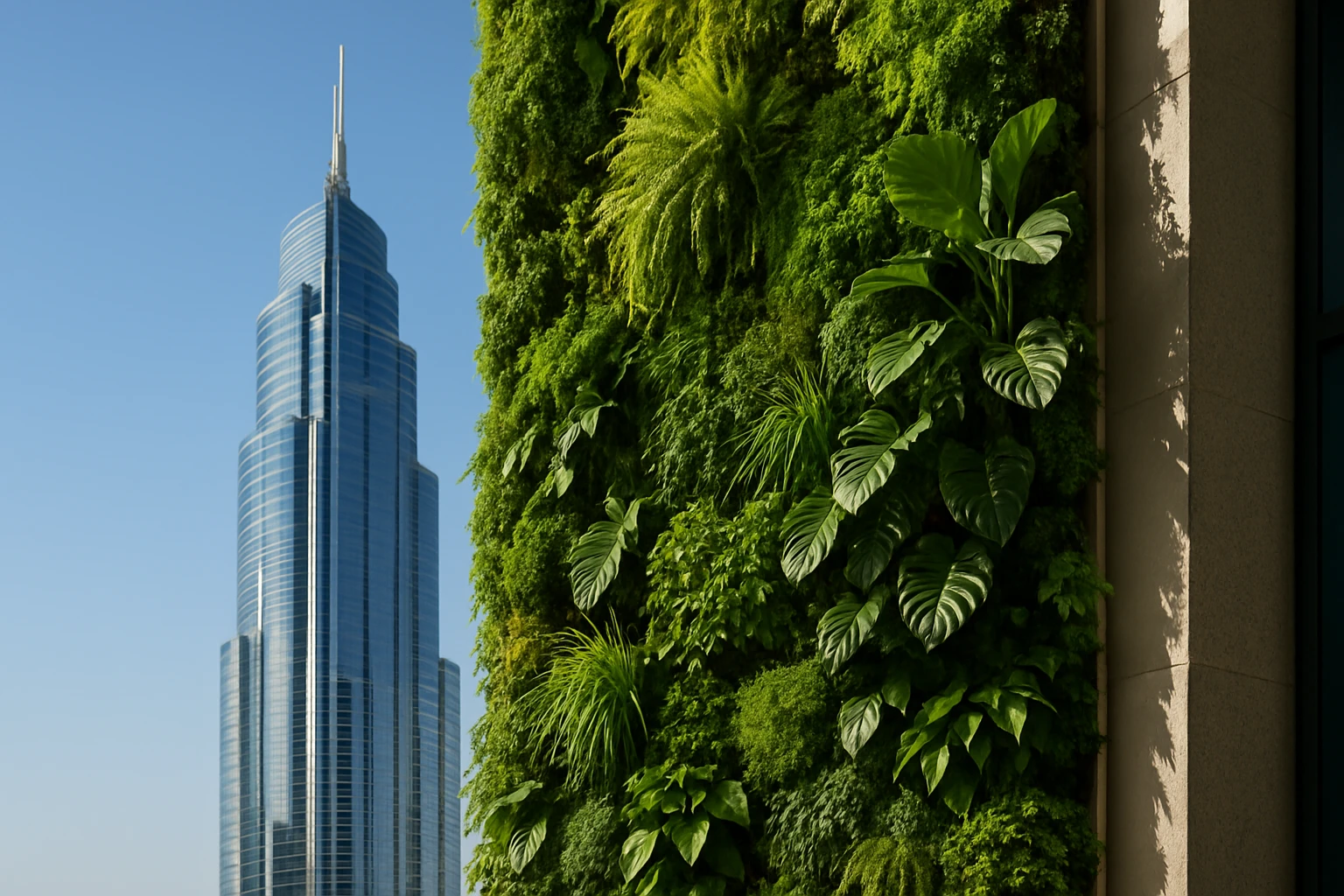
Integrating green walls into urban environments such as Dubai offers a multitude of benefits. Not only do these lush installations enhance the aesthetic appeal of cityscapes, but they also contribute positively to the environment and the well-being of urban dwellers.
Environmental Impact
Green walls have a significant environmental impact by improving air quality through the absorption of carbon dioxide and the release of oxygen. In Dubai, where air conditioning systems frequently run due to the high temperatures, green walls help in reducing energy costs by insulating buildings. According to a study by the National University of Singapore, vertical gardens can reduce indoor temperatures by up to 10°C, contributing to energy savings [Source].
Health and Well-being
These installations do more than just enhance the visual landscape—they also contribute to improved mental health. Exposure to nature is known to reduce stress and promote mental clarity. In a bustling city like Dubai, having access to greenery is a reprieve for both residents and office workers. Businesses like Green Zen specialize in creating biophilic designs that transform urban spaces, enhancing both beauty and well-being through nature-inspired solutions.
Economic Advantages
Green walls can also provide economic benefits. They increase property value by making buildings more attractive and can attract tenants looking for environmentally sustainable spaces. Moreover, governments can save on healthcare costs due to the reduced pollution levels and related health issues. Implementing green walls is aligned with Dubai’s vision for sustainability and urban biodiversity, reflecting a proactive approach toward combating climate challenges.
Overall, the adoption of green wall technologies in urban centers like Dubai is not just a statement of luxury or modernity but a necessary step towards sustainable living. Incorporating greenery into the fabric of urban life lays the foundation for healthier, more enjoyable city experiences, attracting both tourists and long-term residents who value a balanced lifestyle.
Real‑World Applications and Innovative Installations
Building on the challenges discussed earlier, developers and institutions in Dubai have embraced creative applications to demonstrate the multifaceted value of green wall systems. One compelling example is the exterior green wall installed by Planters at Expo 2020. Erected under tight time constraints, the live green wall was assembled in less than two weeks for the opening ceremony and dismantled within five hours afterward—an impressive testament to modular design and operational efficiency in high-profile urban events (Planters’ Expo 2020 case study).
Another standout pilot is the Malabar Gold industrial-site green wall project. Beyond its visual appeal, this installation attracts beneficial pollinators such as bees and birds, offers cooling effects that lower energy expenses, and serves as an educational landmark encouraging visits from local schools and universities (World Green Infrastructure Network report). The local Building Developers Association was so persuaded by these outcomes that they mandated green wall integration across the district, reflecting how real-world results can shape policy.
Institutions also recognize green walls’ impacts on health and productivity. A study at UAE University (UAEU) found that installing living walls in offices significantly reduced particulate matter and volatile organic compounds (VOCs), while also lowering internal temperatures by 0.3 °C to 1.0 °C—translating into reduced energy consumption and enhanced indoor air quality (The National, January 2025).
Key Takeaways and Insights
- Strategic installations—like the modular green wall at Expo 2020—show that temporary or event‑based applications can be both visually impactful and operationally feasible in Dubai’s fast-paced environment.
- Green wall systems can yield measurable environmental benefits such as cooling and energy savings, as seen in the Malabar Gold initiative and UAEU’s indoor air quality improvements.
- Education and community engagement often follow green wall installations, promoting awareness of sustainability through tangible, local examples.
- The observed outcomes have encouraged policy development, with associations incorporating green walls into urban planning standards.
These case studies illustrate how integrating a green wall dubai initiative, whether permanent or temporary, delivers tangible value—environmentally, economically, and socially. Forward-thinking stakeholders can leverage such installations as proof points, fostering broader adoption across public and private sectors. The fusion of aesthetics, performance, and engagement sets a replicable template for sustainable urban transformation in Dubai and similar climates.
Conclusion: Embrace the Future of Urban Design with Green Walls
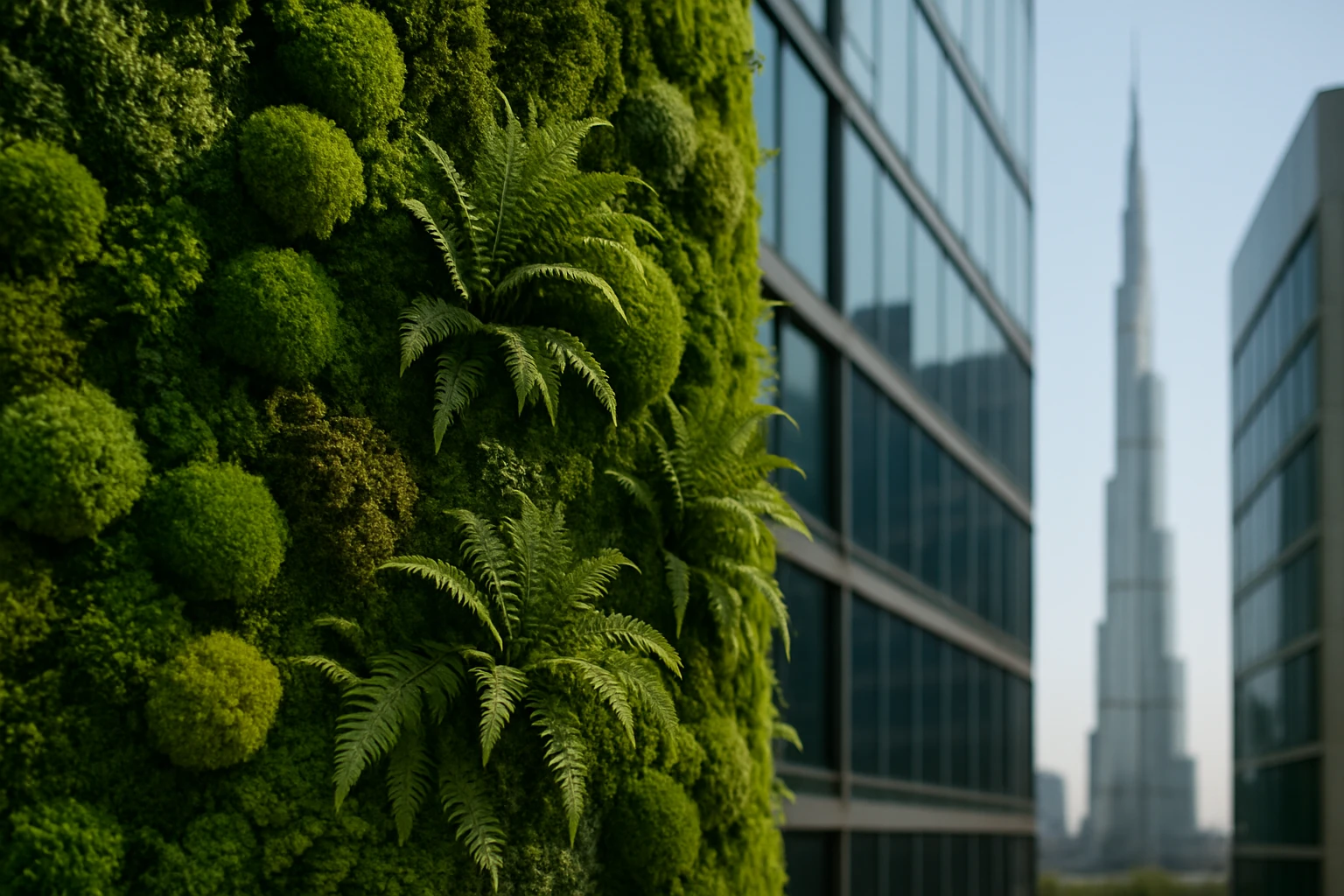
The rising popularity of green walls in Dubai represents a commitment to sustainable living and innovative design. These vertical gardens not only enhance aesthetic appeal but also offer numerous environmental benefits, such as improving air quality and reducing urban heat. As this trend continues to grow, businesses and urban developers are increasingly incorporating green walls into their plans.
Actionable insights for those in the architectural and urban planning sectors include integrating green walls to not only beautify spaces but also to support eco-friendly goals. For example, incorporating a green wall in commercial properties can enhance the value and appeal of the building while contributing to sustainability efforts. This trend is mirrored globally, with cities adopting similar practices, showcasing the transformational power of greenery in urban environments.
Case studies have shown that buildings with green walls can achieve substantial reductions in energy costs. For instance, studies suggest that these installations can lead to a decrease in energy usage by as much as 15% by providing natural insulation and regulating building temperatures. More information on this can be found on reputable sources, such as the Architectural Digest, which explores the impact of green designs on building efficiency.
To effectively implement green wall solutions, consider collaborating with specialists who understand the intricate balance of plant species and architectural design. Companies like Green Zen offer expert services tailored to creating sustainable and aesthetically pleasing vertical gardens, making them an ideal partner for your next project.
Ultimately, by embracing the potential of green walls, Dubai sets a powerful example in modern urban development. As global awareness of environmental sustainability grows, so does the adoption of green infrastructure. These living walls are not merely a trend but a step toward a greener, more sustainable future, underscoring the role of nature in transforming urban spaces.
Article Generated by Soogle
Leave a Reply