
Biophilic Design
Preserved Moss Wall vs. Living Plant Wall: The Best Choice for Dubai Spaces

Introduction: Unveiling Dubai’s Green Wall Revolution
Dubai, known for its architectural grandeur and innovation, is embracing a green transformation that is both captivating and sustainable. The city’s rapid urbanization has spurred interest in integrating nature into its urban settings, leading to a growing debate on what’s better in Dubai: preserved moss wall or living plant wall? As residents and businesses look to enhance their spaces with vertical gardens, the question transcends purely aesthetic choices, delving into maintenance, sustainability, and environmental impact.
The allure of green walls in Dubai is multifaceted. They not only elevate visual appeal but also improve air quality and contribute to mental well-being. As the city thrives in luxury and cutting-edge design, companies and homeowners alike are exploring the best ways to incorporate nature into their environments. This interest in biophilic design signifies a shift towards healthier, more harmonious living spaces. For those considering these green alternatives, a comparison between preserved moss walls and living plant walls offers insightful perspectives into choosing the most suitable option.
Preserved moss walls, celebrated for their low-maintenance nature, are gaining popularity due to their aesthetic versatility and durability. These walls do not require any watering or direct sunlight, making them an attractive option for high-end interiors and spaces with limited natural light. Their vibrant colors and textures bring a slice of nature indoors, without the commitment of regular upkeep. This can be particularly beneficial in the office spaces of Dubai, where maintaining traditional greenery might be a challenge. For more insights on enhancing office environments, explore Elevate Your Office Design With Indoor Plants.
Conversely, living plant walls offer a dynamic and ever-changing canvas of foliage that can transform a stark wall into a bustling ecosystem. These walls not only provide tangible ecological benefits but also imbue spaces with a sense of vitality. While they demand a higher level of maintenance, the rewards can be substantial. Studies have shown that living plant walls can significantly decrease ambient noise and improve indoor air quality by filtering pollutants, contributing positively to overall health and productivity (source).
This landscape of options challenges Dubai’s designers and residents to weigh the benefits and demands of each type of wall. In this article, we will delve deeper into the characteristics, advantages, and applications of preserved moss walls and living plant walls, providing a comprehensive guide to make an informed decision that aligns with Dubai’s commitment to innovation and sustainability.
Navigating the Urban Jungle: Understanding Preserved Moss Walls
Preserved moss walls have rapidly gained popularity in urban settings, especially in innovative cities like Dubai. These walls consist of natural moss that has undergone a preservation process using non-toxic materials. The result is a visually striking, maintenance-free green wall that complements modern architecture. In a bustling metropolis, where sustainability meets aesthetic appeal, such walls provide an attractive solution for architects and interior designers.
One of the most significant advantages of preserved moss walls is their low maintenance requirement. Unlike living plant walls, these do not require regular watering, sunlight, or trimming, making them ideal for indoor environments. According to a study by the Journal of Facilities Management, this aspect not only reduces upkeep costs but also extends the longevity of the wall, thereby offering long-term value.
Moreover, preserved moss walls excel in sound absorption, contributing to quieter, more serene indoor atmospheres. This can be particularly beneficial in open-plan offices or commercial spaces where noise can be a concern. By deploying preserved moss walls, businesses in Dubai can enhance employee focus and overall workplace satisfaction, aligning with initiatives like the use of office plants to reduce workplace stress.
However, it’s important to note that preserved moss walls do have limitations. They are primarily suited for interior settings since direct sunlight and excessive moisture can damage the moss. This constraint requires strategic planning in Dubai’s climate, ensuring these walls are placed in environments where these conditions are controlled. Despite this limitation, their enduring popularity suggests that the balance of benefits and maintenance in the context of what’s better in Dubai – preserved moss wall or living plant wall – often tips in favor of preserved solutions for interior applications.
Preserved moss walls offer a unique blend of beauty and practicality that aligns well with Dubai’s urban futuristic vision. They not only contribute to the aesthetic appeal of buildings but also support Dubai’s sustainability goals by providing a long-lasting green solution with minimal environmental impact. As such, for those seeking a hassle-free, yet lush aesthetic component to their urban settings, preserved moss walls represent a compelling choice.
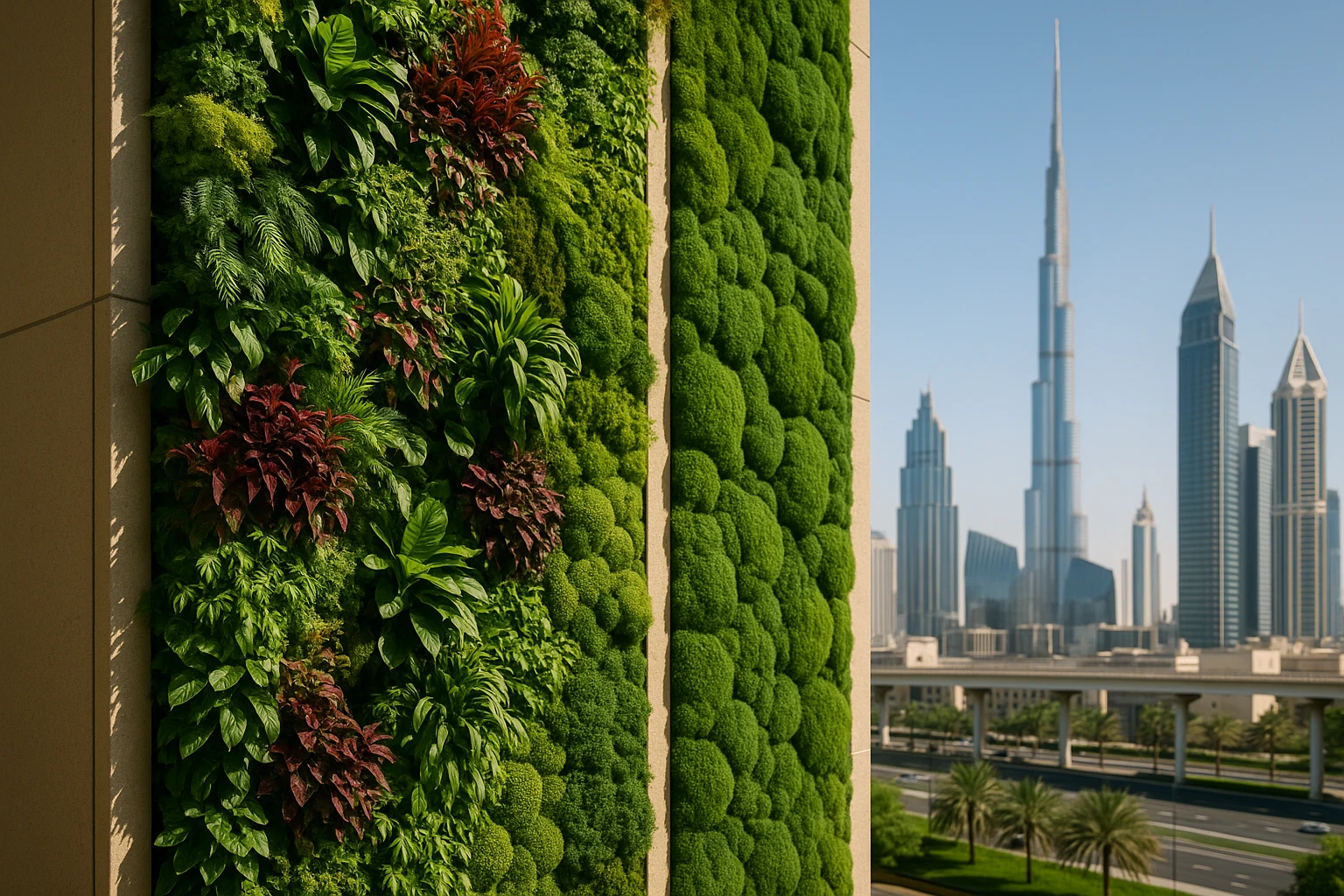
A vibrant vertical garden on a building facade in Dubai, showcasing a lush living plant wall on one side and a textured preserved moss wall on the other, with the city’s iconic skyline visible in the background.
Environmental Factors and Maintenance
Understanding the environmental demands and maintenance needs is crucial when evaluating what’s better in Dubai: preserved moss wall or living plant wall. Dubai’s intense heat and arid climate pose challenges for maintaining vibrant greenery. Living plant walls require regular watering, suitable light conditions, and ongoing care to survive and thrive in this environment. These walls often integrate a hydroponic system, which can be both costly and complex to manage, especially in commercial settings.
On the other hand, preserved moss walls offer a maintenance-free alternative. They do not require sunlight, watering, or trimming. This makes them particularly appealing in Dubai, where conserving resources such as water is critical. The use of preserved moss can significantly reduce the environmental footprint and operational costs associated with building greening projects. As highlighted by biophilic design, integrating elements like preserved moss can transform spaces without the environmental burden.
Choosing the Right Solution
When deciding between preserved moss walls and living plant walls, businesses and homeowners should consider their long-term goals and the specific conditions of their property. Living plant walls offer dynamic aesthetic appeal and can contribute to air purification and humidification. However, these benefits come with higher maintenance requirements and associated costs, which can be a consideration for many in Dubai.
Conversely, preserved moss walls provide a sustainable option with minimal maintenance while still delivering visual interest and textural variety. This can be especially advantageous in office environments where maintenance costs can quickly add up. Businesses in Dubai often turn to consultancies like Green Zen to optimize their space with innovative green solutions.
Case Studies and Real-World Applications
Several projects in Dubai illustrate the effectiveness of both options. For instance, the Green Planet in City Walk employs living plant walls to create a rainforest-like environment, designed to educate visitors about natural ecosystems. Meanwhile, some corporate offices have installed preserved moss walls in their meeting rooms and entryways, providing a splash of green without incurring additional maintenance costs.
The choice between these two options ultimately hinges on specific objectives, such as sustainability goals, aesthetic preferences, and budget considerations. By carefully weighing these factors, decision-makers can determine the best fit for their unique spaces in Dubai.
Moss Walls vs. Living Plant Walls — Operational Realities and Practical Performance
Transitioning from the broader comparisons, this section delves into the operational nuances and real-world effectiveness of these two vertical greening strategies, especially in Dubai’s demanding commercial environments.
Balancing Performance and Practicality
Deciding “what’s better in Dubai: preserved moss wall or living plant wall?” ultimately depends on the building’s priorities. If long-term sustainability, environmental performance, and energy savings are the goals—and budgets and maintenance infrastructure permit—a living plant wall may deliver substantial benefits. In contrast, preserved moss walls offer a visually rich, low-risk alternative ideal for high-density corporate environments demanding minimal maintenance and design precision.
Some organizations in Dubai have innovatively combined both approaches: preserved moss for interior branding and texture, supplemented by limited live greenery for air quality and wellness goals—maximizing aesthetic appeal while balancing operational demands.
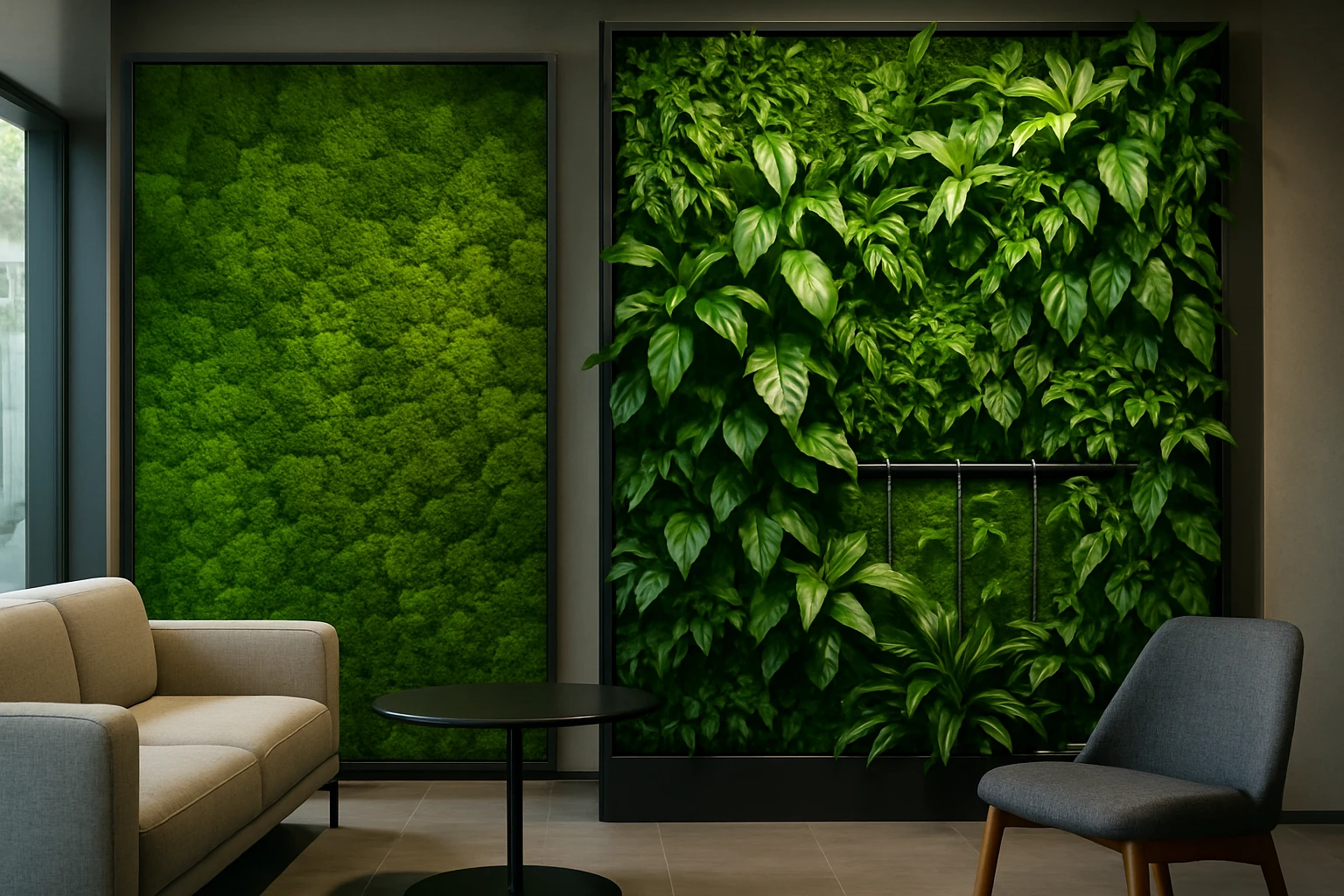
In a sleek, modern indoor setting, a preserved moss wall featuring a variety of green tones is elegantly contrasted with a living plant wall that integrates a sophisticated drip irrigation system, against a backdrop of minimalist furniture and ambient natural lighting.
Conclusion
Both preserved moss walls and living plant walls offer unique advantages, making the decision of “what’s better in Dubai: preserved moss wall or living plant wall?” largely dependent on specific needs and preferences. Dubai, with its dynamic real estate and retail sectors, provides ample opportunities to incorporate these innovative green wall solutions into commercial and residential designs. The preserved moss wall stands out for its low maintenance and longevity, ideal for high-traffic areas where regular upkeep might be challenging. They provide a striking aesthetic with minimal environmental interaction, making them well-suited for locations like lobbies and corridors.
On the other hand, living plant walls bring the transformative power of nature indoors, greatly enhancing air quality and emotional well-being. They offer a sustainable and eco-friendly solution, perfect for workspaces where productivity and relaxation are crucial. However, they do require a more sophisticated maintenance regime, including irrigation and light management, to thrive in Dubai’s unique climate.
When considering which option best fits individual or business needs, it’s important to weigh factors such as aesthetic goals, space functionality, and the resources available for ongoing care. For instance, busy commercial centers in Dubai might prefer preserved moss walls for their simplicity and ease of installation, whereas creative and wellness-focused environments might opt for the vibrant life of plant walls to align with their brand values.
For those looking to explore these options further, partnering with an experienced provider can make a significant difference. Companies like Green Zen offer comprehensive solutions tailored to specific project needs, providing a blend of design expertise and practical implementation. Choosing the right type of green wall can redefine space, enhance environmental quality, and even bolster brand perceptions, making it a worthwhile investment in one of the world’s most vibrant cities.
To make the most informed decision, potential buyers and designers should consider visiting showrooms, seeking advice from experts, and reviewing case studies of successful installations in similar climates. As urban spaces in Dubai increasingly favor sustainable and visually appealing designs, integrating a green wall—whether preserved or living—can be a compelling component of modern architectural projects.
Leave a Reply